Beyond the Lab: New Recycled Material - Mycelium Leather
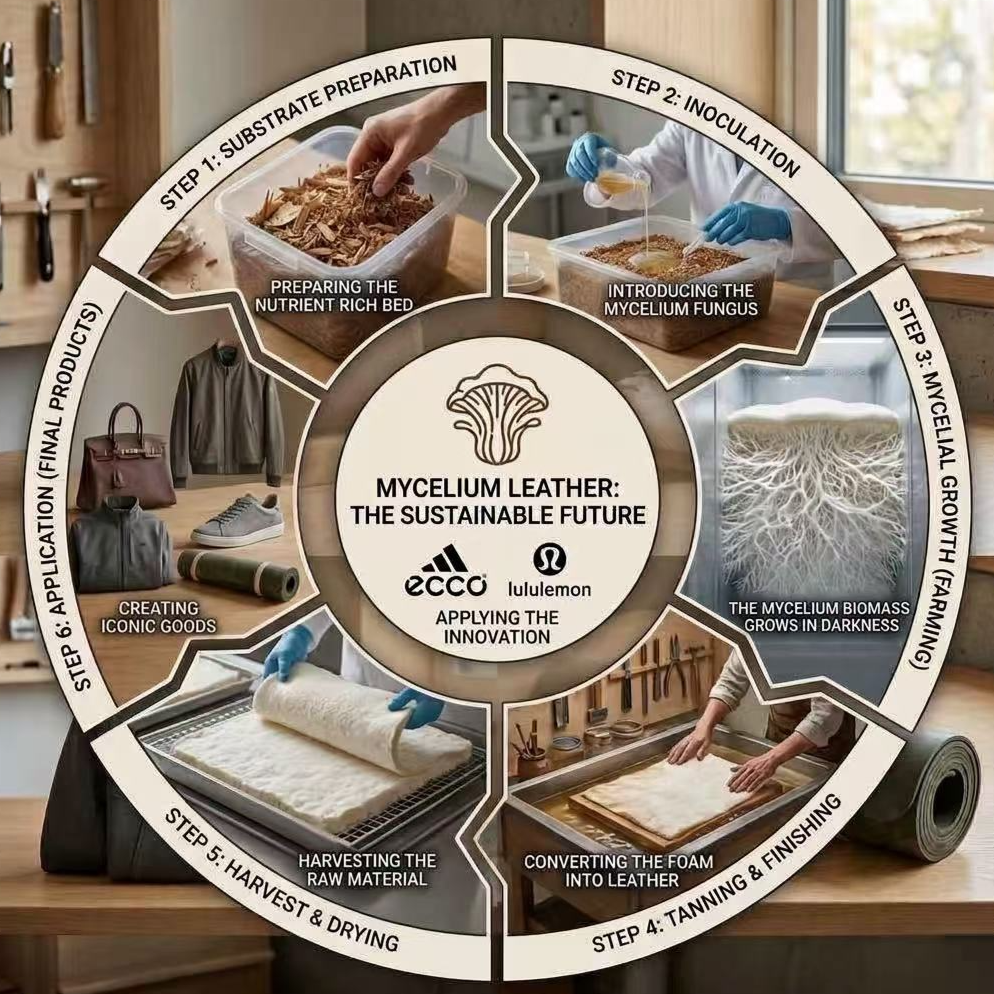
Mycelium leather is "grown," not made. It looks and feels like leather – soft, supple, but a more renewable alternative.
How Mycelium grow?
STEP 1: SUBSTRATE PREPARATION: PREPARING THE NUTRIENT RICH BED
STEP 2: INOCULATION: INTRODUCING THE MYCELIUM FUNGUS
STEP 3: MYCELIAL GROWTH (FARMING)): THE MYCELIUM BIOMASS GROWS IN DARKNESS
STEP 4: TANNING & FINISHING: CONVERTING THE FOAM INTO LEATHER
STEP 5: HARVEST & DRYING: HARVESTING THE RAW MATERIAL
STEP 6: APPLICATION (FINAL PRODUCTS)): CREATING ICONIC GOODS
Mycelium Leather: Leading Brand Applications
-
- Footwear (Adidas): Used in the Stan Smith Mylo™ for durable, high-flexion sneaker uppers.
- Yoga Gear (Lululemon): Applied to mats and bags, offering a premium, plastic-free tactile experience.
- Luxury Bags (Hermès): The Victoria Bag features custom Sylvania material, blending biotech with heritage tanning.
- Apparel (ECCO): Partnered with Ecovative to develop soft, breathable mycelium textiles for fashion.
As global brands face stricter carbon taxes, mycelium offers a 90% reduction in land use and water consumption compared to cattle ranching, without sacrificing the premium "leather" experience consumers demand.
Market Trends for 2026
The global mushroom mycelium leather market was valued at approximately $2.64 billion in 2025 and is projected to nearly double to $4.88 billion by 2032.

Contact Us