
Why Closed-Toe Sport Sandals Are Gaining Ground in the Women’s Outdoor Footwear Market
The women’s outdoor footwear market is entering an interesting phase. For years, sandals were often associated with beaches, holidays and casual summer wear. Hiking footwear, meanwhile, was largely represented by traditional trail shoes and boots. That line is becoming less clear.
A growing number of consumers are looking for footwear that can move between walking trails, weekend travel, water-side activities and everyday summer use. This is creating more room for performance-oriented sandals, particularly closed-toe designs that combine ventilation with greater foot protection.
For brands developing new sandals for women, the change is worth watching closely.
Hiking continues to expand as an outdoor activity
The latest data from the Outdoor Industry Association (OIA) provides a strong indication of where outdoor footwear demand is heading. According to its 2026 Hiking Report, 63.4 million Americans participated in hiking in 2024, representing 20.5% of the U.S. population aged six and older. Hiking participation has nearly doubled since 2012, while more than 13 million new participants have joined the activity since 2019.
The report also highlights an important change in frequency. About 16.7 million people were classified as “core” hikers, meaning they went hiking at least 13 times during the year. Core hiking participation has grown at a 7.6% five-year average annual rate, compared with 5.2% for hiking overall.
This matters for footwear companies because a larger and more committed hiking population creates demand for products designed around specific outdoor needs rather than simple seasonal fashion.
And the opportunity is not limited to male consumers.
The 2025 Outdoor Participation Trends Report found that 31.4 million women participated in day hiking in the United States in 2024, more than one million higher than the previous year. The same report noted that female participation in outdoor recreation reached 53.2% of American women, with women accounting for 52.3% of new outdoor recreation participants in 2024.
For the footwear industry, these numbers point toward a clear market question: what type of footwear best fits the way these women actually spend time outdoors?
The gap between hiking shoes and summer sandals
Traditional hiking shoes provide protection and stability, but they are not always the first choice for warm-weather activities. Heavy uppers, enclosed construction and limited ventilation can become uncomfortable during hot-weather travel, easy trails and water-related activities.
On the other hand, lightweight open sandals offer airflow and convenience but may leave the toes exposed to rocks, roots or accidental impacts.
This is where the closed-toe sport sandal becomes particularly relevant.
A closed-toe outdoor sandal can offer a middle ground between the two categories. It keeps the front of the foot protected while leaving more of the upper open for ventilation. For consumers who move between paved paths, light trails, campsites, resorts and waterfront environments, that combination can make practical sense.
This is also reflected in the broader hiking footwear market. Fortune Business Insights estimates that the global hiking footwear market was valued at USD 11.18 billion in 2025 and projects it to reach USD 20.06 billion by 2034, representing a 6.74% CAGR. Its market segmentation specifically includes hiking sandals alongside low-cut shoes and hiking boots.
In other words, hiking sandals are no longer simply an accessory category sitting outside mainstream outdoor footwear.
Women are looking for more versatility from one pair
Another factor affecting the market is versatility.
Modern outdoor consumers may not classify themselves strictly as “hikers.” One weekend might involve a city walking tour, a short mountain trail, a lakeside trip and dinner at a resort. Buying separate footwear for every activity is not always attractive.
That is one reason comfort, versatility and practical construction have become important themes in women's footwear.
Circana's 2026 footwear data shows a similar pattern. Its July 2026 industry data reported 10.3% growth in Hiking/Trekking/Mountaineering, while the Outdoor/Water Sandal segment declined 8.6%.
The figures should not be interpreted as evidence that all outdoor sandals are declining. Instead, they illustrate an interesting market contrast: consumers may be prioritizing footwear connected to activity and performance, while more generic outdoor/water sandal categories face greater pressure.
For brands, this creates an opportunity to rethink what a sandal represents.
Protection is becoming an important design feature
A closed toe is one of the most visible differences between an everyday sandal and a performance-oriented outdoor sandal.
For women's hiking and outdoor products, toe protection can be especially useful when footwear is used on rocky surfaces or uneven terrain. A reinforced or covered toe area helps reduce direct contact between the toes and external obstacles.
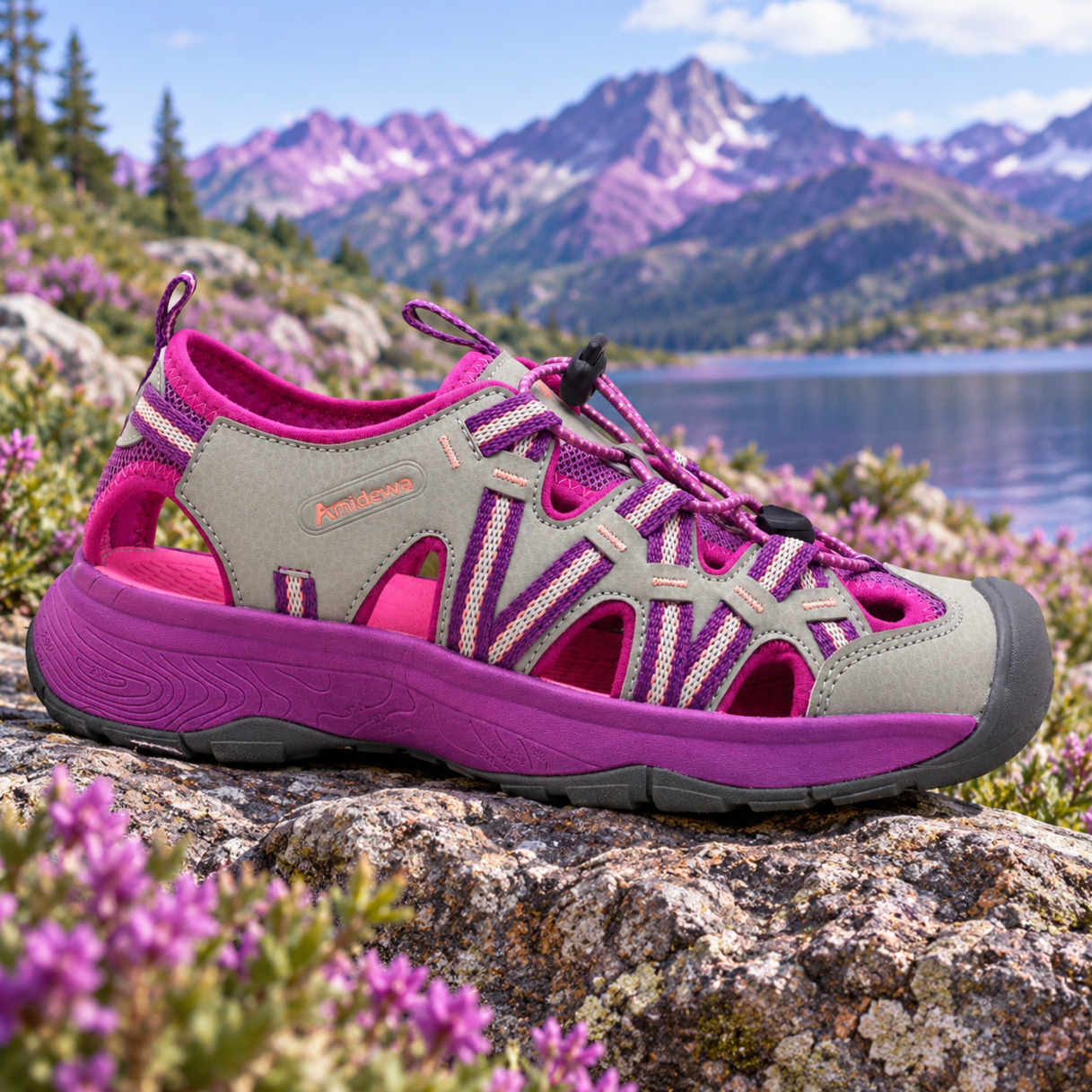
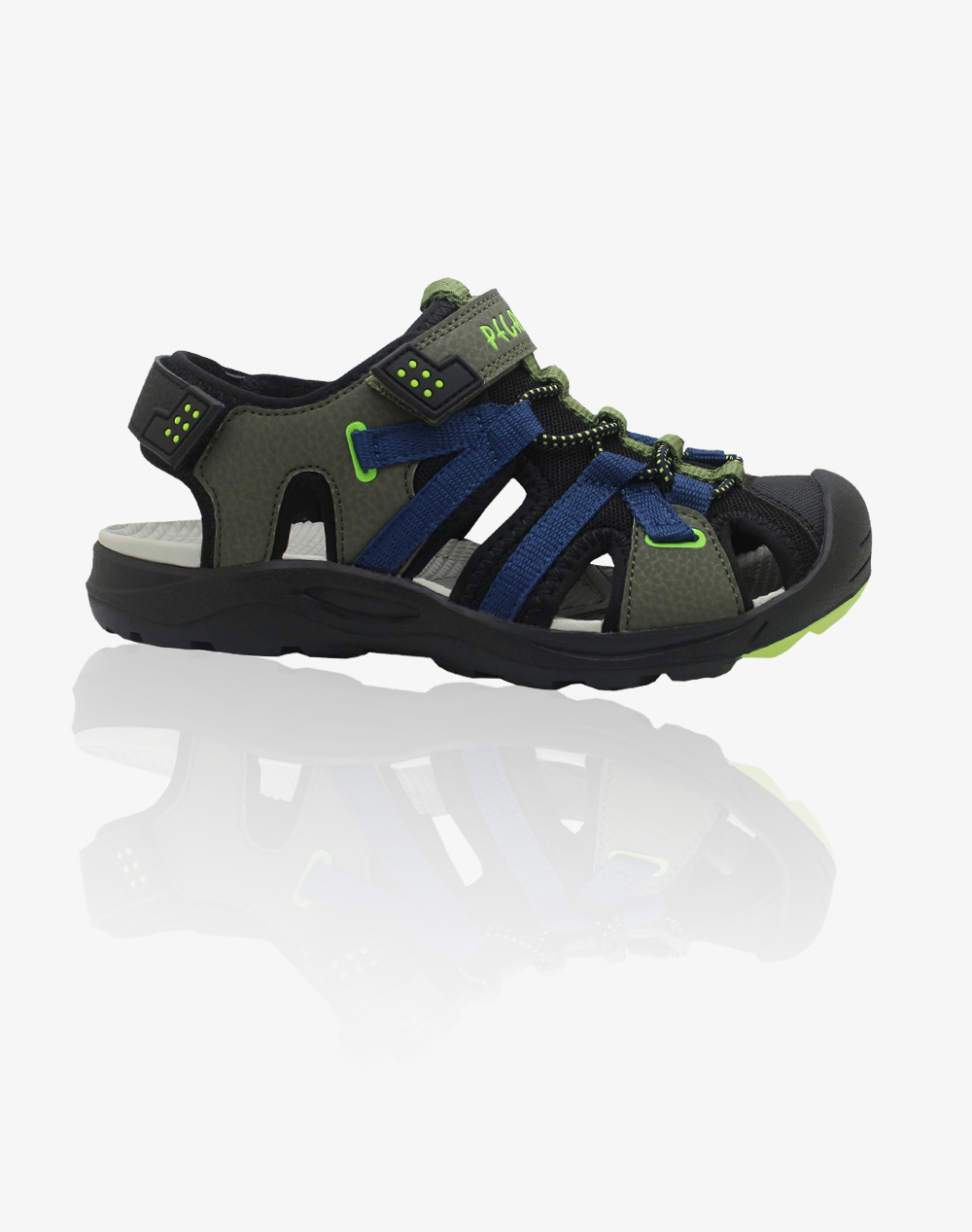
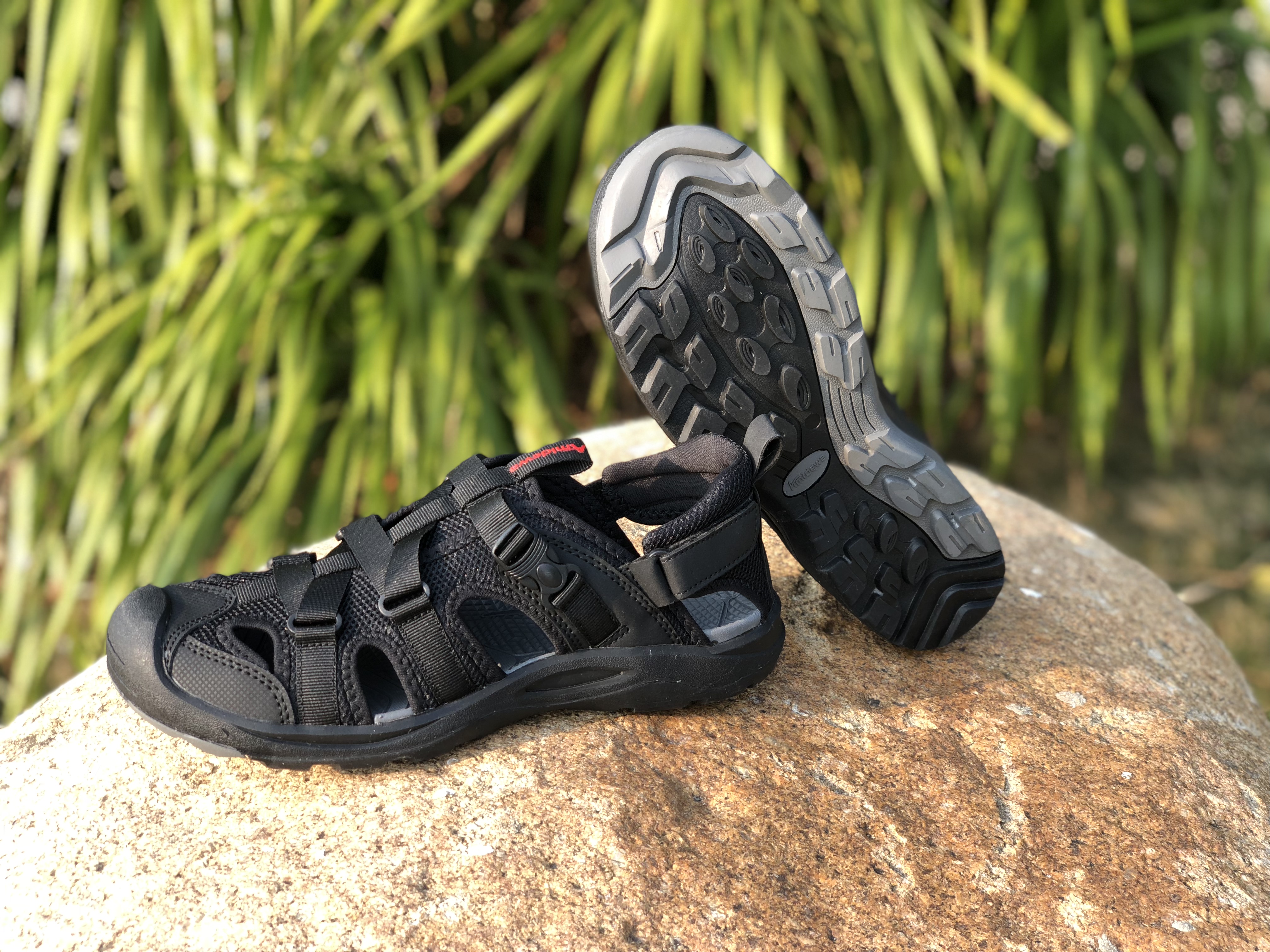
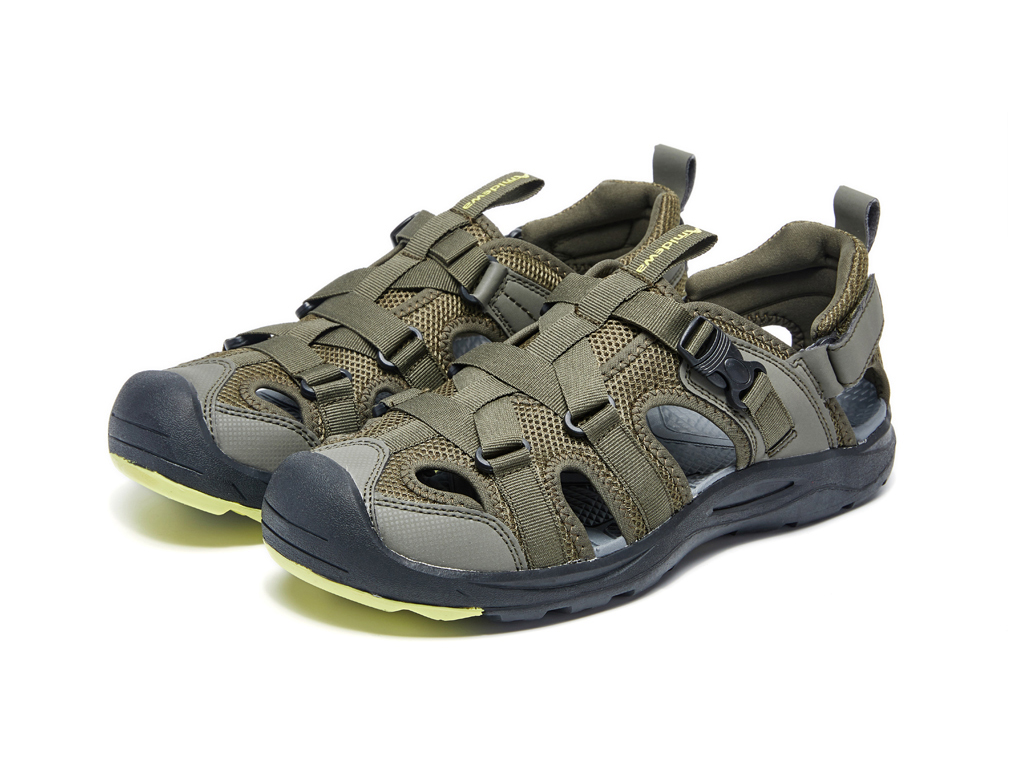
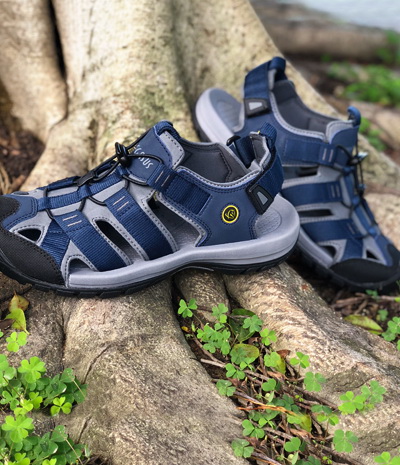
The product shown here follows that approach. The closed toe creates a protective front structure, while the cut-out sections around the upper maintain airflow. The design therefore does not attempt to turn a sandal into a conventional hiking boot. Instead, it keeps the lighter identity of a sandal while adding protection where it matters.
That balance is increasingly important for brands targeting hiking sandals women.
Cushioning matters just as much as protection
Protection alone is not enough. A sandal intended for longer walking or outdoor activity also needs a comfortable platform.
The pictured design uses a Phylon midsole, a material commonly used in athletic footwear because of its lightweight cushioning characteristics. In a women's sport sandal, a soft and shock-absorbing midsole can help reduce the harsh feeling created by hard ground surfaces and make extended walking more comfortable.
The outsole is equally important.
A rubber outsole with a durable tread pattern provides the traction needed for everyday outdoor movement. It is not accurate to describe any outsole as completely slip-proof, because traction varies according to surface conditions, tread design and weather. However, a wear-resistant rubber outsole with an appropriate tread pattern can provide the grip expected from a practical hiking sandal.
For product developers, this three-part construction — toe protection, cushioned Phylon midsole and rubber outsole — represents a straightforward way to communicate functional value without overloading the product with unnecessary features.
The wider sandals market remains significant
The overall sandal category is still substantial. Fortune Business Insights estimates the global sandals market at USD 66.79 billion in 2025 and forecasts growth to USD 110.28 billion by 2034, with a 5.73% CAGR. The firm identifies comfort-focused lifestyles, seasonal demand, travel and casual footwear as important market drivers.
At the same time, another 2025 industry analysis estimated the global women's sandals market at approximately USD 37.1 billion in 2025, with projected growth to nearly USD 49.9 billion by 2033. Different research companies use different definitions and methodologies, so market-size figures should not be treated as directly interchangeable.
The common point is that women's sandals remain a sizeable global footwear category, while performance and outdoor use are creating additional directions for product development.
What this means for brands and retailers
The next generation of sandals for women may not fit neatly into either the fashion or hiking category.
Instead, hybrid designs are likely to remain important: sandals that look lightweight enough for travel, feel comfortable enough for daily walking and provide enough protection for outdoor activities.
For product buyers, several details deserve attention when evaluating new styles: toe coverage, cushioning, outsole construction, adjustability, breathability, weight and visual appeal. These elements determine whether a sandal can move beyond occasional summer wear and become a repeat-use outdoor product.
The growth of hiking also provides a larger consumer base to address. With 63.4 million U.S. hikers recorded in 2024 and 31.4 million female day hikers, the potential audience is broad and increasingly diverse.
The market is therefore moving toward a more practical question: not simply whether women want sandals, but what they expect those sandals to do.
For brands developing the next season's hiking sandals women collection, that distinction could become increasingly important. A well-designed closed-toe sport sandal does not need to replace hiking shoes. Its role is different: lighter, more ventilated and easier to wear across multiple environments, while still providing protection, cushioning and traction.
That combination reflects where outdoor footwear is heading — toward products designed around real lifestyles rather than strict category boundaries.


Contact Us